
Eating healthy does not have to mean preparing complicated meals or giving up enjoyable flavors. A colorful salad made with fresh vegetables, fruits, whole grains, beans, lean proteins, nuts, seeds, and flavorful dressings can be both satisfying and convenient.
Whether you need a quick lunch, a refreshing side dish, or a simple dinner, having a collection of light and refreshing salad ideas for healthy eating can make everyday meal planning easier. The key is to combine fresh ingredients with enough protein, fiber, healthy fats, and flavor to create a meal that is enjoyable as well as nourishing.
Below are practical salad ideas that can bring variety, freshness, and color to your table.
Why Add More Salads to Your Diet?
Salads provide an easy way to include a variety of foods in one meal. Depending on the ingredients, they can contain vegetables, fruits, whole grains, legumes, protein sources, nuts, and seeds.
Fresh vegetables and fruits can contribute important nutrients and dietary fiber. Beans, lentils, chicken, eggs, fish, tofu, or other protein sources can make a salad more substantial.
The biggest advantage is flexibility. You can customize a salad according to your preferences, available ingredients, budget, and dietary needs.
A well-balanced salad can work as breakfast, lunch, dinner, or a side dish.
1. Classic Cucumber and Tomato Salad
Sometimes the simplest combinations are the most refreshing.
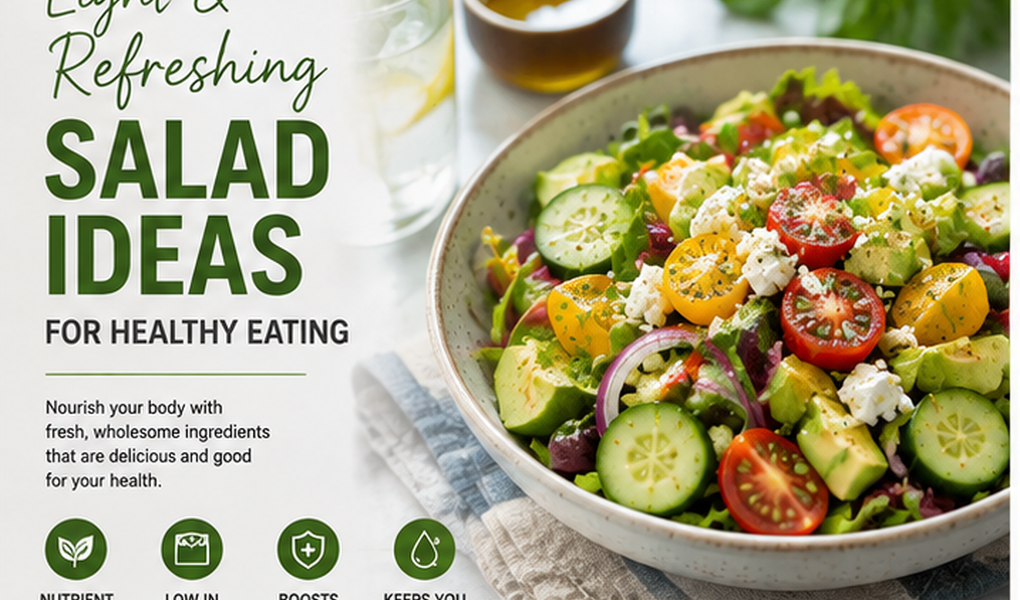
Combine sliced cucumbers, tomatoes, red onion, and fresh herbs such as parsley or mint. Add a small amount of olive oil and fresh lemon juice.
Season with black pepper and a modest amount of salt.
This salad is particularly refreshing during warmer weather and works well alongside grilled chicken, fish, rice, or other main dishes.
For additional protein, consider adding chickpeas or a small amount of cheese.
2. Grilled Chicken Garden Salad
A vegetable salad becomes a more complete meal when you add a good source of protein.
Start with leafy greens and add cucumber, tomato, carrots, bell peppers, and grilled chicken.
For dressing, combine olive oil, lemon juice, black pepper, and herbs.
Grilled chicken adds protein without requiring a heavy sauce. You can prepare the chicken in advance and keep it refrigerated for quick lunches during the week.
This is an excellent option for anyone looking for a filling yet relatively light meal.
3. Mediterranean Chickpea Salad
Chickpeas are convenient, versatile, and naturally rich in plant-based protein and fiber.
Combine cooked chickpeas with:
- Cucumber
- Tomatoes
- Red onion
- Bell pepper
- Parsley
- Olives
- A small amount of feta cheese, if desired
Finish with lemon juice, olive oil, oregano, and black pepper.
This salad can be prepared ahead of time, making it useful for work lunches or busy weekdays.
4. Watermelon and Feta Salad
Few combinations feel as refreshing on a warm day as watermelon and fresh herbs.
Cut watermelon into cubes and combine it with a modest amount of feta cheese, cucumber, and fresh mint.
A squeeze of lime or lemon adds brightness.
The sweet watermelon contrasts beautifully with the salty feta, while cucumber and mint make the salad even more refreshing.
It can be served as a light side dish at lunches, barbecues, or summer gatherings.
5. Avocado and Corn Salad
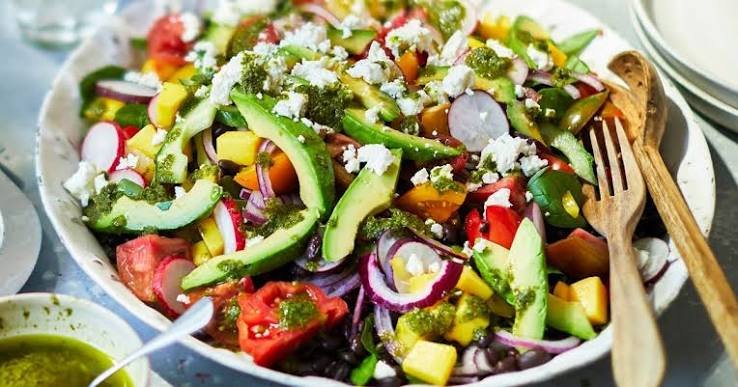
For a creamy texture without relying on a heavy dressing, avocado is an excellent ingredient.
Combine avocado cubes with cooked corn, tomatoes, cucumber, red onion, and fresh cilantro.
Add lime juice and black pepper.
Avocado provides fat and creates a satisfying texture, while corn adds mild sweetness.
Because avocado can brown after being cut, this salad is best prepared close to serving time.
6. Spinach and Strawberry Salad
Fruit can add natural sweetness and color to leafy salads.
Combine fresh spinach with sliced strawberries, walnuts or almonds, and a small amount of cheese if desired.
A simple dressing made from olive oil and a mildly acidic ingredient can complement the sweetness of the strawberries.
This combination works particularly well during spring and summer when fresh berries are available.
7. Quinoa Vegetable Salad
Quinoa can transform a basic vegetable salad into a more substantial meal.
Cook quinoa according to the package instructions and allow it to cool. Combine it with cucumber, tomatoes, bell peppers, herbs, and your favorite leafy greens.
Add lemon juice and a small amount of olive oil.
You can also include chickpeas, chicken, tofu, or beans for additional protein.
Quinoa salad is useful for meal preparation because many of its ingredients can be prepared ahead of time.
8. Apple and Walnut Green Salad
Apples provide sweetness and crunch that work well with leafy vegetables.
Combine sliced apple with mixed greens, walnuts, cucumber, and a small amount of cheese.
For a balanced flavor, use a light dressing containing an acidic ingredient such as lemon juice or vinegar.
If preparing the salad in advance, coat apple slices lightly with lemon juice to help slow browning.
9. Tuna and Vegetable Salad
Canned tuna can make a quick protein-rich salad when you have limited preparation time.
Combine drained tuna with lettuce, cucumber, tomatoes, onions, carrots, and other vegetables you enjoy.
Instead of using a large amount of creamy dressing, try lemon juice, herbs, black pepper, and a small amount of olive oil.
Check the product label if you are monitoring sodium or other nutritional factors.
This salad can provide a convenient lunch when you need something fast.
10. Greek-Style Salad
A Greek-inspired salad offers plenty of flavor without requiring a complicated recipe.
Combine tomatoes, cucumber, red onion, bell peppers, olives, and feta cheese.
Add oregano, olive oil, and lemon juice or vinegar.
Because feta and olives can contain significant amounts of sodium, portion sizes can be adjusted according to individual dietary needs.
Serve it alone as a side dish or add chickpeas or grilled chicken to make it more filling.
11. Mango and Cucumber Salad
Mango brings tropical sweetness to a simple vegetable salad.
Combine diced mango with cucumber, red onion, cilantro or mint, and fresh lime juice.
For people who enjoy a little heat, a small amount of fresh chili can add contrast.
This refreshing salad pairs particularly well with grilled foods and can be prepared in only a few minutes.
12. Lentil and Vegetable Salad
Cooked lentils are an excellent foundation for a satisfying salad.
Combine cooled lentils with tomatoes, cucumber, carrots, red onion, parsley, and bell peppers.
Add lemon juice, herbs, and a small amount of olive oil.
Lentils provide protein and fiber, making the salad more substantial than vegetables alone.
It can also be stored in the refrigerator for convenient meal preparation.
13. Cabbage and Carrot Crunch Salad
Cabbage is affordable, crunchy, and versatile.
Thinly slice cabbage and combine it with grated carrots, cucumber, herbs, and a light dressing.
Instead of a heavy mayonnaise-based dressing, try lemon or lime juice with a modest amount of oil.
Seeds or chopped nuts can provide additional crunch.
Because cabbage holds its texture relatively well, this salad can be useful for packed lunches.
14. Orange and Mixed Greens Salad
Citrus fruits can make ordinary greens much more interesting.
Combine orange segments with mixed greens, cucumber, red onion, and almonds.
A simple citrus-based dressing complements the fruit.
This salad offers a combination of sweet, fresh, and slightly tangy flavors, making it a good option when traditional vegetable salads begin to feel repetitive.
15. Egg and Vegetable Salad Bowl
Eggs can turn fresh vegetables into a quick and satisfying meal.
Start with leafy greens and add boiled eggs, cucumber, tomatoes, carrots, and bell peppers.
Finish with herbs, black pepper, lemon juice, and your preferred light dressing.
You can also add a small portion of whole grains or beans if you want a more substantial meal.
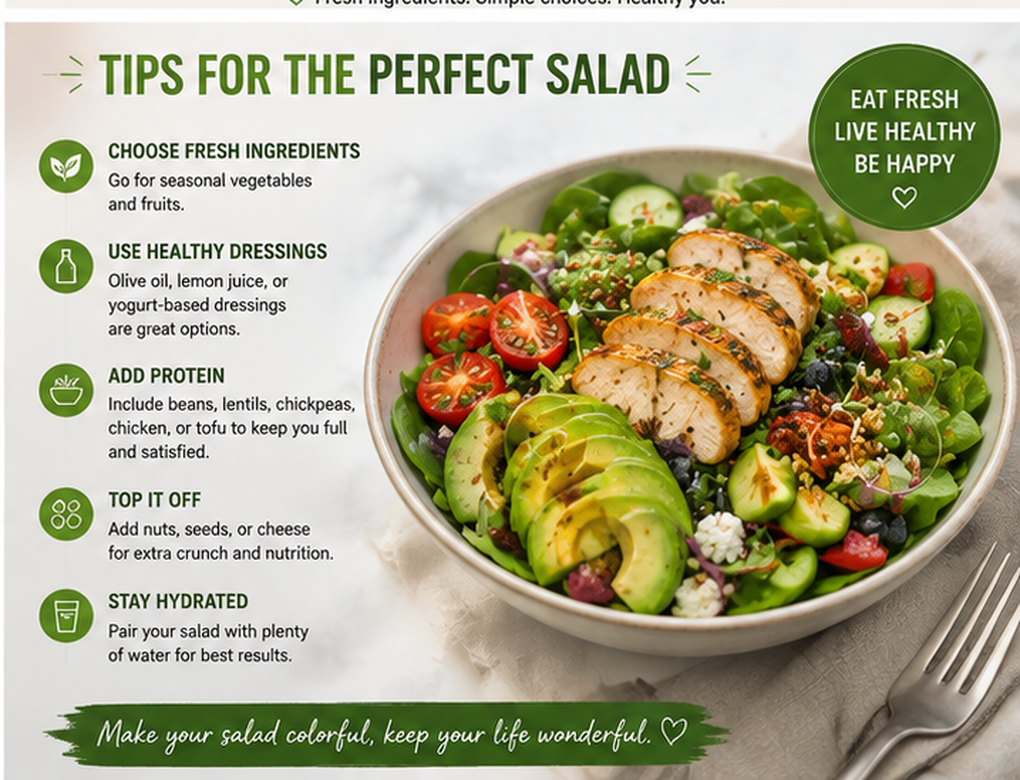
How to Build a Balanced Healthy Salad
A salad does not automatically become a balanced meal simply because it contains lettuce.
For a more satisfying salad, consider combining several components.
Vegetable base: Lettuce, spinach, cabbage, cucumber, tomatoes, carrots, or other vegetables.
Protein: Chicken, eggs, tuna, beans, chickpeas, lentils, tofu, or another preferred protein source.
Healthy fats: Nuts, seeds, avocado, or an appropriate amount of olive oil.
Carbohydrates: Whole grains, corn, quinoa, beans, fruit, or other carbohydrate sources when desired.
Flavor: Herbs, spices, lemon juice, lime juice, vinegar, or a flavorful dressing.
This approach creates more variety in taste, texture, and nutrition.
Choose Salad Dressings Carefully
A nutritious salad can become much heavier depending on the amount and type of dressing used.
Commercial dressings can vary considerably in calories, added sugars, sodium, and fat. Checking the nutrition label can help you compare options.
Simple homemade dressings are another possibility.
For example, lemon juice, herbs, black pepper, and a measured amount of olive oil can create plenty of flavor.
You do not necessarily need to eliminate creamy dressings entirely. Portion awareness can allow you to enjoy your preferred dressing while maintaining the overall balance of the meal.
Tips for Making Salads More Flavorful
Healthy food should still taste enjoyable.
Fresh herbs such as mint, parsley, basil, and cilantro can dramatically change the flavor of a salad.
Other useful additions include roasted seeds, nuts, citrus zest, spices, fresh fruit, grilled vegetables, or a small amount of cheese.
Texture is equally important.
Combining crunchy vegetables with soft avocado, juicy fruit, beans, nuts, or grilled protein makes a salad more interesting than using only leafy greens.
Meal Prep Tips for Fresh Salads
Salads can be prepared ahead of time, but storing ingredients correctly helps preserve freshness.
Wash and thoroughly dry vegetables before storing them. Excess moisture can cause leafy greens to deteriorate more quickly.
Store dressings separately until serving whenever possible.
Ingredients that release moisture, such as tomatoes, can also be stored separately if you are preparing meals several hours in advance.
Cooked proteins and grains should be cooled and refrigerated safely before being added to meal-prep containers.
Avocados and some cut fruits are usually better added shortly before eating.
Healthy Salads for Weight Management
Salads can be useful in a balanced eating plan because vegetables can add volume and fiber to meals.
However, weight management depends on the overall diet rather than one individual food.
Large amounts of high-calorie dressing, fried toppings, cheese, or other additions can significantly change a salad’s nutritional profile.
For a balanced meal, focus on vegetables while including enough protein and other satisfying ingredients.
Extremely restrictive salads containing only a few vegetables may leave you hungry and make healthy eating harder to maintain.
Common Salad Mistakes to Avoid
One common mistake is assuming that every restaurant salad is automatically a light option. Large portions of dressing, fried ingredients, processed meats, cheese, and other toppings can change the nutritional content considerably.
Another mistake is making salads too small or nutritionally incomplete.
A bowl of lettuce and cucumber may not provide enough energy or protein to function as a complete meal for many people.
Instead, aim for balance and variety.
Food safety also matters. Wash fresh produce appropriately, refrigerate perishable ingredients, and avoid leaving salads containing meat, eggs, fish, or dairy at unsafe temperatures for extended periods.
Making Healthy Eating More Enjoyable
One reason people abandon healthier eating habits is boredom.
Eating exactly the same salad every day can quickly become repetitive.
Rotate ingredients according to the season.
You might enjoy watermelon and cucumber during summer, apple and walnuts during cooler months, or different combinations of roasted and fresh vegetables throughout the year.
Changing herbs, proteins, fruits, grains, and dressings can create dozens of meals from the same basic salad formula.
Healthy eating is generally easier to maintain when food remains enjoyable.
Final Thoughts
These light and refreshing salad ideas for healthy eating show that salads can be much more than a bowl of plain lettuce.
From Mediterranean chickpea salad and grilled chicken bowls to watermelon and feta, mango and cucumber, quinoa vegetables, and apple-walnut greens, there are plenty of combinations to explore.
The best salad is one that fits your preferences and provides a satisfying mixture of ingredients.
Focus on fresh vegetables and fruits, include appropriate protein and fiber sources, add healthy fats in reasonable portions, and experiment with herbs and flavorful dressings.
Rather than thinking of healthy eating as a restrictive diet, use salads as an opportunity to add more color, variety, texture, and fresh ingredients to your everyday meals.
Frequently Asked Questions
What are the healthiest ingredients to put in a salad?
A balanced salad can include leafy greens and vegetables, a protein source such as beans, lentils, eggs or chicken, healthy fats from nuts, seeds or avocado, and other ingredients such as whole grains or fruit.
How can I make salad filling without making it heavy?
Include protein and fiber-rich foods such as chicken, eggs, chickpeas, beans, lentils, or quinoa. A small amount of nuts, seeds, avocado, or olive oil can also improve satisfaction.
What is a good light dressing for salad?
Lemon or lime juice combined with herbs, spices, and a measured amount of olive oil is a simple option. Vinegar-based dressings can also work well.
Can I eat salad every day?
Salads can be regularly included in a varied diet. Changing vegetables, proteins, grains, fruits, nuts, and other ingredients can help provide variety rather than relying on the same combination every day.
Which salad is best for lunch?
A salad containing vegetables plus protein and other satisfying ingredients is generally more suitable for lunch than vegetables alone. Grilled chicken, chickpea, lentil, quinoa, tuna, or egg salads are practical options.